
How Real Estate Developers Can Attract Investors Through Digital Marketing

Real estate developer marketing has shifted heavily toward digital channels. Investors no longer rely only on in-person meetings or industry conferences to evaluate opportunities. They review websites, analyze track records online, and compare developers through digital touchpoints before committing capital.
For developers seeking to raise funds, digital marketing is no longer optional—it is a requirement. A structured strategy can highlight credibility, demonstrate past performance, and create consistent investor engagement. Here, we will cover 10 proven ways developers can attract investors online, beginning with branding, investor-ready websites, and SEO-backed digital positioning.
1. Investor-First Positioning & Messaging
Real estate investors evaluate developers differently from homebuyers or tenants. While design, location, and amenities may attract the public, investors focus on measurable factors such as returns, risk controls, and credibility. A developer’s branding and messaging should reflect this investor-first perspective.
Why Positioning Matters for Developers
Positioning is more than logo design or visuals—it is about how the firm communicates its value as an investment partner. Institutional investors, family offices, and accredited individuals compare multiple developers at once. A clear, consistent message can determine whether a developer receives funding or is overlooked.
When messaging is vague, investors perceive higher risk. When messaging is precise, supported by data, and aligned with investor priorities, developers gain authority and trust.
Building a Value Proposition Investors Trust
A value proposition should explain three things: what the developer builds, why investors should fund it, and how risks are managed.
Key elements include:
Track Record: Completed projects with measurable outcomes. Investors want to see Internal Rate of Return (IRR), equity multiple, and project timelines. For example, showing that a multifamily project in Dallas achieved a 2.1x equity multiple over five years communicates reliability.
Differentiators: Developers must highlight unique advantages. These could include entitlement expertise, access to off-market land, sustainable building practices, or a proven ability to secure favorable financing.
Investment Thesis: Investors want to understand the strategy behind future projects. This could involve targeting suburban growth markets, pursuing mixed-use developments in urban cores, or focusing on value-add repositioning.
Messaging Pillars That Resonate with Investors
Strong messaging aligns with investor priorities:
Capital Preservation: Investors want confidence that downside risks are mitigated through conservative leverage, contingency planning, and thorough due diligence.
Predictable Returns: Instead of broad promises, developers should provide target ranges, such as a projected IRR of 14–16% or annual cash-on-cash returns of 7–8%. Historical results should back up these numbers.
Transparency and Governance: Investors expect professional reporting structures. This means quarterly updates, access to financial statements, and third-party audits when applicable.
Creating Proof That Supports Branding
Branding without evidence is weak. Developers must reinforce messaging with proof. This includes detailed biographies of executives and project managers, with emphasis on years of experience, certifications, and notable achievements. Completed projects should be documented with before-and-after photos, absorption rates, and lease-up timelines. Third-party validations—such as lender references, municipal approvals, or industry awards—add additional credibility.
Positioning and messaging serve as the foundation for digital marketing. Without them, even the most advanced campaigns will struggle to convert investor interest into capital commitments.
2. Investor-Ready Website & Landing Pages
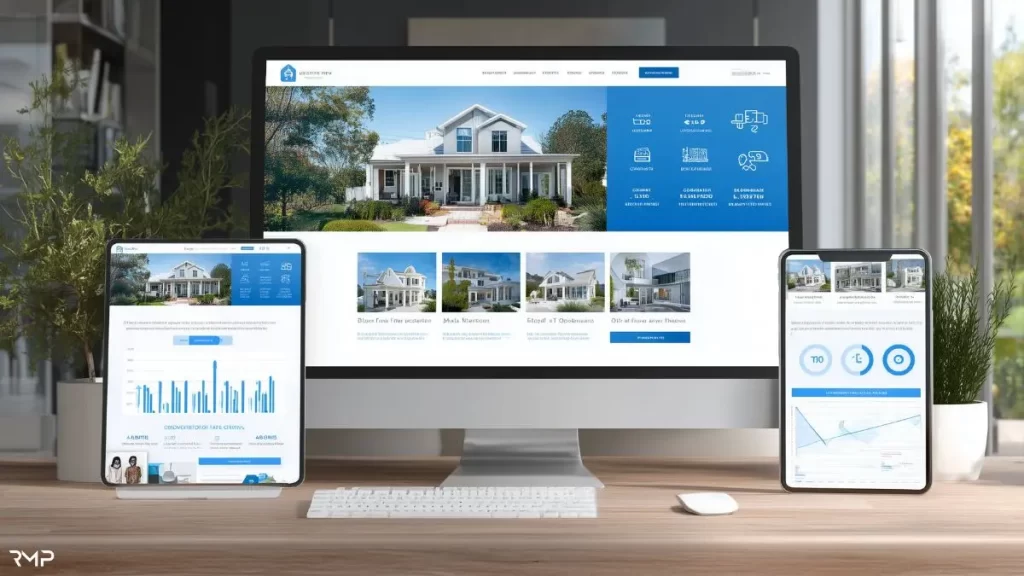
A website is the digital headquarters of a developer’s investor relations strategy. Most investors perform online research before agreeing to a meeting, which means the quality of a developer’s website directly influences whether they are taken seriously.
The Role of the Website in Investor Marketing
Unlike consumer-facing real estate sites that focus on property sales or rentals, a developer’s site must function as both a credibility hub and a lead generation tool. It should answer investor questions, demonstrate experience, and offer a clear path to initiate discussions.
When a website fails to provide this, investors may assume the developer lacks organization or professionalism. On the other hand, a well-structured site signals transparency, operational maturity, and investor readiness.
Essential Sections for Investor Confidence
A developer’s website should contain several core sections tailored for capital-raising:
Investor Landing Page: This page introduces the investment thesis in clear terms. It should outline the developer’s focus (such as multifamily, mixed-use, or industrial projects), geographic markets, and current pipeline. A single, visible call-to-action (CTA), like “Request Investor Briefing Pack” or “Schedule an Investor Call,” helps capture leads.
Track Record: Investors expect to see completed and ongoing projects. Present data such as total square footage delivered, occupancy rates, IRR achieved, and exit timelines. For example, a portfolio page that shows five projects completed in the last decade with combined returns of over $500M in equity value builds confidence.
Project-Specific Pages: Each project should have its own page with high-quality visuals, maps, site plans, entitlement status, and construction timelines. This gives investors insight into execution capability.
Resource Center: Downloadable case studies, market reports, and investor FAQs demonstrate transparency and industry knowledge. Including a section that explains deal structures (co-GP, preferred equity, joint ventures) can also attract the right type of investor.
Secure Data Room Preview: While full data rooms require NDAs, developers can outline what investors will gain access to—financial models, legal documents, and detailed market studies.
Technical & SEO Considerations
A professional site also requires technical optimization to ensure visibility and usability:
Site Speed & Mobile Optimization: Research from Google shows that pages taking longer than three seconds to load cause up to 53% of users to abandon. For developers, slow load times can mean losing high-value investors.
Structured Data & Schema Markup: Adding schema such as Organization, BreadcrumbList, and FAQ can improve rankings and visibility in Google’s rich results.
Accessibility Compliance: Alt text for images, keyboard navigation, and ADA-compliant formatting ensure inclusivity and reduce legal risk.
Conversion Optimization: Embedding contact forms, meeting schedulers like Calendly, and SSL certificates not only improve user experience but also build trust.
Measuring Website Performance
Key performance indicators (KPIs) for investor-focused websites include:
- Conversion rate of landing pages (form fills and meeting requests).
- Number of qualified investor inquiries received through the site.
- Session duration and engagement rates on track record and resource pages.
Developers who invest in professional website optimization shorten the time between investor awareness and engagement. Instead of chasing prospects with incomplete information, they attract inbound interest from investors who arrive pre-qualified and ready for conversations.
3. Real Estate SEO for Investor Intent
Search visibility is one of the most powerful ways developers can reach qualified investors. Unlike outbound strategies that rely on cold outreach or networking, SEO attracts investors at the exact moment they are searching for opportunities or researching a developer’s credibility.
Understanding Investor Search Behavior
Investor intent is very different from consumer intent. Homebuyers may search for “new condos in Miami” while investors are more likely to use queries such as:
- “multifamily development investment opportunities in Texas”
- “private equity real estate partners in New York”
- “industrial property developers joint venture”
These searches reveal investors are not browsing—they are actively seeking information on markets, returns, and potential partners. Capturing these searches requires a precise SEO strategy.
Building a Keyword Strategy for Capital Raising
Developers should build their keyword strategy around three categories of investor intent:
- Educational Intent: Investors seeking insights, e.g., “real estate development risk factors” or “IRR in multifamily projects.”
- Transactional Intent: Investors comparing firms, e.g., “top real estate developers in Austin” or “joint venture partners for mixed-use projects.”
- Branded Intent: Investors verifying credibility, e.g., “[Developer Name] projects” or “[Developer Name] reviews.”
Balancing these keyword groups ensures visibility at all stages of the investor journey, from early research to final decision-making.
On-Page Optimization for Investor Confidence
SEO is not only about ranking—it is also about signaling professionalism to investors. Key on-page considerations include:
- Clear Metadata: Titles and descriptions should be written in precise, professional language. For example, instead of “Luxury Condos for Sale,” use “Investor-Backed Multifamily Developments | [Developer Name].”
- Structured Content: Using H2/H3 subheadings, project statistics, and internal links helps both Google and investors navigate.
- Visual Proof: Embedding project maps, charts of historical returns, and video walk-throughs increases engagement and lowers bounce rates.
Authority Through Off-Page SEO
Investors pay attention to credibility signals beyond the developer’s own website. Features in industry publications, mentions in business journals, and backlinks from financial institutions strengthen authority. A link from GlobeSt.com or Commercial Observer carries far more weight with both search engines and investors than a general directory listing.
Tracking ROI on SEO for Investor Acquisition
Developers should track how organic traffic translates into qualified investor leads. Useful metrics include form submissions on investor landing pages, requests for investor decks, and booked meetings. Advanced tracking can even tie inquiries back to specific keywords, showing which terms are generating the strongest ROI.
SEO for investor intent is not a short-term tactic—it is an asset that compounds over time, turning a developer’s website into an inbound deal flow engine.
4. Thought Leadership & Content Engine
In capital raising, credibility is often the deciding factor between winning or losing an investor. Thought leadership gives developers a platform to demonstrate expertise, market knowledge, and transparency—traits investors actively seek.
The Role of Content in Investor Relations
Investors want confidence that a developer not only understands construction but also understands markets, cycles, and risk management. Regular, insightful content positions a developer as a market authority rather than just a builder. This makes investors more likely to view them as a partner who can safeguard and grow capital.
Formats That Build Authority
A content engine should be multi-channel, targeting investors where they consume information most:
- Research-Driven Articles: Long-form blog posts on market trends, zoning shifts, or capital markets provide depth. For instance, a post analyzing “Why Industrial Development in Inland Empire Outperforms Coastal Markets” showcases research-backed expertise.
- Investor Reports & Whitepapers: Quarterly or annual insights on development pipelines, absorption rates, and market forecasts demonstrate professional rigor.
- Video Updates: Short, polished updates from executives on current projects or market conditions humanize the firm and make leadership accessible.
- Webinars & Podcasts: Hosting discussions with capital partners, lenders, or municipal leaders positions the developer at the center of industry conversations.
Editorial Strategy That Attracts Investors
Developers should build an editorial calendar that aligns with investor questions at different stages:
- Early stage: “What makes a multifamily market resilient during downturns?”
- Mid stage: “How do joint venture structures mitigate risk?”
- Late stage: “What does due diligence look like for our projects?”
Distribution Beyond Owned Channels
Creating content is not enough—it must reach the right audience. Developers should distribute thought leadership pieces across LinkedIn, industry newsletters, and investor-focused platforms. Guest contributions to outlets like Urban Land Institute, NAIOP, or Institutional Real Estate, Inc. further extend reach and enhance authority.
Measuring the Impact of Content on Capital Raising
The success of a content engine should be measured not only by page views but by investor engagement. Metrics such as time on page, downloads of investor reports, LinkedIn connection requests, and inbound meeting requests are leading indicators that content is driving real capital interest.
Creating a Consistent Narrative
Consistency is critical. If messaging on the website, investor decks, and thought leadership articles diverges, investors may question reliability. The most effective developers align content with their core investment thesis, weaving the same narrative across all touchpoints.
When executed properly, thought leadership shifts perception. Developers stop being seen as one of many firms seeking capital and start being viewed as trusted experts shaping the future of real estate markets.
5. LinkedIn ABM & Investor Outreach
In today’s capital markets, investors are not just reading reports—they are networking, researching, and validating partnerships on LinkedIn. For real estate developers, the platform is no longer optional; it is one of the most effective channels for investor outreach and account-based marketing (ABM).

Why LinkedIn Matters for Investor Relations
Unlike Facebook or Instagram, LinkedIn is built around professional credibility. High-net-worth individuals, family offices, private equity professionals, and institutional allocators all maintain an active presence on the platform. Investors use LinkedIn to evaluate leadership teams, confirm track records, and gauge a firm’s market expertise. Developers who neglect this channel risk being invisible to decision-makers.
Building an Investor-Centric LinkedIn Presence
A strong profile and company page are the foundation of outreach. Developers should ensure:
- Executive Profiles Are Optimized: Leadership bios must highlight development experience, capital raised, and market focus. Investors look for competence and clarity, not generic descriptions.
- Company Page Reflects Credibility: Project case studies, milestone announcements, and research insights should be regularly posted to signal activity and transparency.
- Visual Identity Is Consistent: Banner images, headshots, and branding should align with the developer’s website and investor materials.
Account-Based Marketing (ABM) Strategy on LinkedIn
ABM focuses on targeting specific investor accounts rather than broad audiences. For developers, this means identifying priority segments—such as regional family offices or institutional funds—and tailoring outreach accordingly.
- Precision Targeting: LinkedIn’s filters allow segmentation by firm size, job title, location, and investment focus. This ensures outreach only reaches qualified investor profiles.
- Personalized Messaging: Cold, templated messages rarely work. Developers should craft outreach around shared market interests, past projects, or industry events to establish relevance.
- Content Distribution to Target Accounts: Sponsored posts can be promoted directly into the feeds of selected investor lists, increasing visibility with those most likely to allocate capital.
Turning LinkedIn into a Deal-Flow Engine
The goal of LinkedIn outreach is not just to connect but to convert conversations into investor meetings. Developers can achieve this by integrating LinkedIn with their CRM, tracking engagement, and nurturing leads with timely follow-ups. Posting consistent thought leadership and market updates creates a “drip effect,” keeping the firm top-of-mind until the investor is ready to engage.
When executed strategically, LinkedIn becomes a powerful bridge between digital visibility and real-world capital raising.
6. PPC for High-Intent Investor Leads
While SEO and organic social build long-term visibility, paid media accelerates access to investors actively searching for opportunities. Pay-per-click (PPC) campaigns allow developers to place their brand in front of investors at the exact moment intent is highest.
Capturing High-Intent Investor Searches
Investors using search engines with transactional intent often include terms such as:
- “real estate development investment opportunities”
- “joint venture real estate partners”
- “private equity real estate firms [city/market]”
These searches represent bottom-of-funnel prospects. Unlike display advertising, PPC captures investors when they are researching or comparing developers, making conversion rates significantly higher.
Structuring PPC Campaigns for Capital Raising
Successful campaigns require a precise strategy:
- Tightly Aligned Ad Groups: Keywords should be segmented by investor type (family office, institutional, private equity) and asset class (multifamily, industrial, mixed-use).
- Professional Ad Copy: Ads must be written with institutional tone—highlighting track record, deal structures, or geographic expertise—rather than promotional slogans.
- Investor-Focused Landing Pages: Instead of generic project pages, ads should drive investors to dedicated landing pages offering downloadable investor decks, case studies, or meeting requests.
LinkedIn Ads vs. Google Ads in Investor Acquisition
Both platforms play distinct roles:
- Google Ads: Captures active intent through search queries. Ideal for investors looking for specific opportunities or development partners.
- LinkedIn Ads: Enables precision targeting by job title, firm type, and decision-making role. Better for proactive outreach to specific investor segments.
Optimizing PPC for Qualified Leads
PPC success depends on more than impressions or clicks. Developers should track metrics tied to investor behavior:
- Form submissions for investor presentations
- Downloads of financial models or project briefs
- Calendar bookings for calls with the capital markets team
A/B testing headlines, ad copy, and call-to-actions helps refine performance over time. For example, shifting from “Invest in Multifamily Growth” to “Request Our 2025 Multifamily Investment Brief” often results in higher engagement from institutional investors.
Managing Cost Efficiency
Capital raising campaigns must be precise—broad targeting wastes ad spend. Developers should set geographic filters, exclude irrelevant terms, and use remarketing campaigns to re-engage investors who visited the website but did not convert.
When optimized, PPC delivers measurable ROI by generating a steady pipeline of qualified investor inquiries, accelerating timelines for capital commitments.
7. Email Marketing & Investor Nurture
Email remains one of the most reliable and measurable channels for building long-term investor relationships. While social media and paid campaigns capture attention, email is where consistent trust is built and conversations are advanced toward capital commitments.

Why Email Still Matters for Developers
Institutional investors, family offices, and high-net-worth individuals are accustomed to receiving structured communications via email. Unlike social posts that disappear quickly, emails allow developers to deliver timely updates, share performance data, and position themselves as disciplined operators. For many investors, a well-designed investor email is their first impression of a firm’s professionalism.
Structuring Investor Nurture Sequences
An effective investor email strategy is not a one-off campaign but an ongoing sequence that moves prospects from initial awareness to active engagement. Developers should consider segmenting their lists into categories such as:
- Prospective Investors: Individuals or firms who have expressed interest but have not yet allocated capital.
- Active Investors: Current stakeholders who require quarterly updates, financial performance reports, and new deal briefings.
- Past Investors or Lapsed Leads: Contacts who may return in the future if nurtured with market insights and case studies.
Content That Builds Investor Confidence
Each email should provide value beyond promotion. Examples include:
- Market updates on sectors where the developer has expertise (e.g., multifamily absorption rates, industrial rent growth trends).
- Case studies highlighting successful exits or stabilized assets.
- Invitations to upcoming investor briefings, webinars, or roadshows.
- Performance dashboards and KPIs to demonstrate transparency.
The tone must remain professional and fact-driven. Investors expect concise communication supported by credible data, not marketing fluff.
Personalization and Automation
Modern email platforms allow developers to personalize outreach at scale. Emails can be tailored with investor names, preferred asset classes, and geographic interests. Automation sequences ensure timely follow-ups after an investor downloads a presentation, attends a webinar, or visits the website. This combination of relevance and consistency keeps investors engaged without overwhelming them.
8. Webinars & Virtual Roadshows
In an era where in-person investor conferences are costly and often limited to select geographies, digital events such as webinars and virtual roadshows have become essential for reaching a wider investor base. For developers, these formats replicate the intimacy of face-to-face meetings while offering scalability and measurable engagement.
Why Digital Investor Events Are Effective
Investors are increasingly comfortable making decisions after engaging through virtual channels. A well-executed webinar or virtual roadshow allows developers to:
- Showcase new projects and deal structures.
- Present thought leadership on market conditions.
- Answer live investor questions, building transparency and trust.
- Record sessions for on-demand access, extending the life of the content.
Compared to static investor decks, live or recorded video creates stronger emotional resonance and credibility by putting the management team front and center.
Webinars as a Thought Leadership Platform
Regularly hosted webinars allow developers to establish themselves as authorities in their markets. Topics might include “The Future of Class A Multifamily in Secondary Cities” or “Institutional Appetite for Logistics Assets in 2025.” By framing discussions around investor interests rather than self-promotion, developers attract higher-quality participants and position themselves as informed market partners.
Virtual Roadshows for Capital Raising
When developers are seeking capital for specific projects, virtual roadshows provide a structured way to present opportunities to multiple investors simultaneously. Unlike one-on-one calls, roadshows create efficiency by reaching dozens of qualified investors at once, while still allowing interactive Q&A. Integrating platforms like Zoom or Microsoft Teams with CRM systems ensures every attendee is logged, tracked, and followed up with.
Leveraging YouTube and On-Demand Video
Beyond live events, developers can extend reach by hosting recordings on YouTube or private investor portals. Shorter, segmented clips—such as a five-minute overview of a project or a CEO commentary on market trends—can be repurposed across email campaigns and LinkedIn. This builds an ongoing video library that reinforces credibility with investors who prefer visual content over text-heavy reports.
Measuring Event ROI
The value of webinars and roadshows lies not just in attendance numbers but in follow-up actions. Metrics such as meeting requests, investor deck downloads, or subsequent email responses signal true engagement. Developers should integrate event attendance with nurture campaigns, ensuring every participant receives personalized follow-up based on their level of interest.
9. Reviews, Press, and Third-Party Validation
Investor trust is shaped not only by what a developer says but also by what the market and independent voices say about them. Reviews, press mentions, and third-party validation act as credibility multipliers, reassuring investors that they are partnering with a transparent and respected operator.
The Power of Credibility Signals in Capital Raising
Investors face constant pitches, making it difficult to separate genuine opportunities from risky ventures. Third-party validation provides the reassurance needed to cut through skepticism. A developer that consistently earns media coverage, receives industry recognition, and features in credible outlets naturally stands out. These signals reduce perceived risk, especially for investors conducting initial due diligence.
Media Coverage and Industry Press
Coverage in respected real estate publications—such as GlobeSt.com, Commercial Observer, or Institutional Real Estate, Inc.—positions a developer as an authority in their niche. For example, being quoted in a feature about multifamily housing trends or publishing an op-ed on the future of industrial developments demonstrates both market knowledge and industry relevance. Press mentions should be strategically repurposed across investor decks, LinkedIn, and email campaigns to maximize visibility.
Leveraging Testimonials and Case Studies
Direct investor reviews or testimonials, while less common than in consumer markets, are powerful when used correctly. Developers can highlight testimonials from institutional partners, joint venture collaborators, or financing partners who can vouch for their professionalism and execution track record. Paired with case studies of successful projects, these testimonials create a strong narrative that blends both numbers and human trust.
Certifications, Awards, and Associations
Recognition from credible institutions—such as ULI (Urban Land Institute), NAIOP, or local business councils—adds another layer of credibility. Even regional awards for design, sustainability, or community impact demonstrate operational excellence and vision. Displaying these on websites, investor decks, and roadshow presentations signals a developer’s reputation extends beyond self-promotion.
The Compounding Effect of Validation
While a single press mention or award may not close a deal, the cumulative impact of multiple validations significantly shapes perception. Over time, investors begin to associate the developer’s brand with reliability, market expertise, and long-term value creation. This ongoing credibility reinforcement shortens due diligence cycles and strengthens fundraising outcomes.
10. CRM, Lead Scoring, and Analytics
Behind every successful investor marketing strategy lies a disciplined system for managing relationships and measuring performance. For developers, a well-implemented CRM combined with lead scoring and analytics ensures that investor engagement is both scalable and strategic.
Why Developers Need a CRM Built for Investors
Spreadsheets and email inboxes are not sufficient for managing dozens—or even hundreds—of investor relationships. A CRM (Customer Relationship Management system) allows developers to centralize all investor data, track interactions, and maintain an organized view of the pipeline. Platforms like HubSpot, Salesforce, or Juniper Square provide developers with investor-specific functionality, from tracking commitments to automating follow-up sequences.
Lead Scoring to Prioritize Investor Outreach
Not every investor interaction carries the same weight. Lead scoring assigns value to behaviors—such as opening an email, attending a webinar, or downloading an investor deck—so that developers can focus on the most engaged prospects. For example:
- An investor who attends a virtual roadshow and requests a private follow-up receives a higher score than one who only opened a newsletter.
- CRM-integrated scoring systems automatically adjust rankings in real time, ensuring outreach aligns with actual investor intent.
This structured prioritization helps developers deploy time and resources effectively, reducing missed opportunities.
Analytics That Drive Smarter Capital Raising
Data analytics within a CRM extend beyond tracking who clicked or opened an email. Developers can analyze patterns such as:
- Which content formats (case studies, webinars, market reports) drive the most engagement.
- The average number of touchpoints required before investors request a meeting.
- How different investor segments—such as family offices vs. institutional funds—engage across channels.
Integration Across Marketing Channels
The strength of a CRM lies in its ability to integrate with other digital tools—email platforms, LinkedIn campaigns, event software, and website analytics. This creates a unified investor journey map, where every action is logged and analyzed. Instead of siloed efforts, developers gain a complete view of how prospects progress from initial awareness to signed commitment.
From Reactive to Proactive Fundraising
Ultimately, CRM and analytics shift developers from a reactive to a proactive fundraising approach. Instead of waiting for investors to reach out, developers can anticipate needs, track behaviors, and time outreach strategically. This data-driven discipline not only increases capital-raising efficiency but also signals professionalism to investors, who value operators with organized, systematic processes.
Want to attract more investors with a clear strategy? Generate a personalized roadmap in seconds with our Free Real Estate Marketing Plan Generator, designed to help developers stand out online.
Developer Marketing Funnel: From Awareness to Capital Commitment
Attracting investor attention is only the first step. A well-structured marketing funnel guides prospects through a journey—from initial awareness to evaluating the opportunity, engaging with the developer, and ultimately making a capital commitment.
Awareness and Education
The funnel begins with visibility. Developers must position themselves where investors are actively looking for opportunities: industry press, LinkedIn, search engines, and thought leadership content. Market reports, project updates, and educational webinars help establish authority and attract top-of-funnel attention.
Consideration and Engagement
Once awareness is established, investors require deeper insights. At this stage, developers should provide detailed project decks, case studies, and thought leadership content that demonstrates track record and market expertise. Personalized outreach through LinkedIn ABM campaigns and investor nurture emails strengthens engagement.
Evaluation and Trust Building
As investors begin due diligence, credibility becomes the deciding factor. Third-party validation—press mentions, testimonials, and certifications—reduces perceived risk. Regular investor updates, one-on-one calls, and Q&A sessions reinforce transparency, giving investors confidence in both the project and the developer.
Conversion to Capital Commitment
The final stage is structured around clarity and confidence. An investor-ready website, well-designed landing pages, and a streamlined onboarding process ensure that interested investors can move quickly from evaluation to commitment. Clear communication on expected returns, timelines, and reporting cadence closes the gap between interest and action.
Compliance, Risk & Investor Relations Guardrails
While marketing plays a critical role in raising capital, it must be executed within strict compliance boundaries. Regulations such as the SEC’s advertising rules for private placements require developers to balance promotion with accuracy and transparency.
Compliance in Messaging and Outreach
Every piece of content—from pitch decks to blog posts—must avoid overstating returns or guaranteeing outcomes. Claims should be supported with data, and disclaimers must be consistently included. Developers should work with legal counsel to ensure marketing efforts align with securities regulations.
Risk Management in Investor Communication
Overpromising is one of the fastest ways to lose investor trust. Risk factors—such as market volatility, zoning approvals, or construction delays—should be clearly outlined in investor materials. Addressing challenges upfront demonstrates maturity and builds credibility.
Investor Relations as an Ongoing Function
The role of investor communication does not end once commitments are secured. Consistent reporting, quarterly updates, and transparent responses to questions maintain long-term relationships. Strong investor relations not only reduce churn but also increase the likelihood of repeat commitments in future projects.
You Should Also Read: 7 Common Real Estate Marketing Mistakes to Avoid Today
Conclusion
Raising capital in today’s real estate market requires more than a compelling project—it demands a structured investor marketing system. From brand positioning and investor-ready websites to SEO, content, LinkedIn ABM, PPC, and CRM analytics, each tactic plays a role in guiding investors from awareness to commitment. When executed with compliance guardrails and a clear investor relations strategy, this system not only accelerates fundraising but also strengthens long-term trust.
At Realty Marketing Pro (RMP), we specialize in helping developers build investor-focused marketing engines that attract, engage, and convert high-value investors. Whether you’re preparing to raise your first fund or scaling capital across multiple projects, our team ensures your marketing works as hard as your developments.
Ready to position your projects for serious investor attention? Contact RMP today to build your investor-first marketing strategy.


