
Social Media Marketing for Construction Companies

Social media marketing for construction companies has become one of the most effective ways to build visibility, showcase projects, and connect with new clients. Platforms like Facebook, Instagram, LinkedIn, and YouTube allow builders and contractors to display their work to homeowners, developers, and investors in ways that traditional marketing cannot.
With over 4.8 billion people actively using social platforms worldwide, construction companies that invest in social media gain a competitive edge in reaching local and regional markets.
Why Social Media Marketing Matters for Construction Companies

Shifting Homeowner and Client Behavior
Before hiring a contractor, most homeowners and developers search online to validate credibility. According to BrightLocal, 87% of consumers read online reviews before contacting a local business. For construction firms, a strong social media presence acts as proof of reliability and quality. Showcasing project progress, client testimonials, and safety practices builds trust long before the first consultation.
Benefits of Social Media for Builders and Contractors
Social media delivers measurable advantages for construction businesses:
- Brand visibility – A consistent presence across Instagram, Facebook, and LinkedIn keeps a company visible to homeowners, investors, and partners.
- Lead generation – Facebook lead ads, Instagram campaigns, and YouTube videos can generate targeted inquiries for new construction projects.
- Trust and transparency – Sharing time-lapse videos or before-and-after photos helps potential clients see the quality of work.
- Competitive differentiation – Firms that showcase eco-friendly practices, unique designs, or large-scale projects often stand out in saturated markets.
Common Challenges Construction Companies Face Online
Despite the benefits, many construction firms struggle with execution.
- Smaller teams may lack time to manage accounts consistently.
- Content ideas beyond finished project photos are often limited.
- Measuring ROI from social campaigns is difficult without the right analytics setup.
Best Social Media Platforms for Construction Companies
Not every platform is equally effective for construction businesses. The choice depends on the type of projects, target audience, and whether the focus is residential or commercial work. Understanding where potential clients spend time online allows construction companies to prioritize resources effectively.
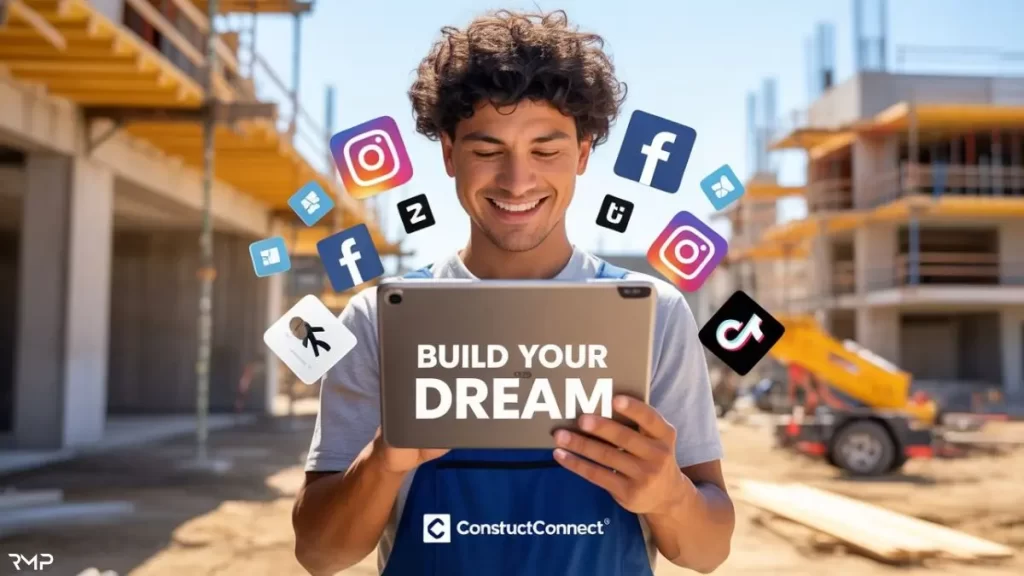
Facebook Marketing for Contractors
Facebook remains one of the most versatile platforms for construction firms. A business page serves as a central hub where companies can post project updates, share testimonials, and run paid advertising. Local targeting features allow contractors to reach homeowners within a specific radius of their service area, making it particularly effective for regional lead generation. Groups also provide opportunities to engage with communities, answer questions, and establish authority.
Instagram Marketing for Builders
Instagram excels in visual storytelling, which is vital for showcasing construction projects. High-resolution images of before-and-after transformations, timelapse reels of ongoing builds, and drone footage resonate strongly with homeowners.
Features like Stories and Highlights allow builders to capture behind-the-scenes progress while keeping evergreen content accessible. Using local and industry-specific hashtags helps expand reach among target audiences searching for construction or renovation services.
YouTube and Video Marketing for Construction Projects
Video plays a significant role in buyer decisions, especially for high-value services like construction. YouTube provides a platform for longer content such as walkthroughs of completed homes, client testimonial videos, or educational guides about building materials and processes.
Shorter clips repurposed as YouTube Shorts or TikTok content extend visibility to younger audiences who prefer quick, engaging content. Optimizing video titles and descriptions with keywords improves discoverability.
LinkedIn for B2B Construction Marketing
For companies working on commercial projects or aiming to collaborate with architects, developers, and investors, LinkedIn is essential. Sharing case studies, industry insights, and company milestones builds professional credibility. Sponsored LinkedIn campaigns also allow firms to target decision-makers in industries like real estate development or corporate facility management, making it a strong platform for securing larger-scale contracts.
Content Ideas and Strategies for Construction Social Media
Creating engaging content is often the biggest hurdle for construction companies. While completed project photos are effective, relying solely on them limits engagement. A diverse content mix captures attention, builds authority, and encourages interaction.

Engaging Content Types for Builders
Construction companies can leverage a wide range of formats to keep their social feeds dynamic. Project showcases remain essential, but adding variety helps strengthen brand positioning. For example, time-lapse videos showing a home built from foundation to finish tell a compelling story that photos alone cannot.
Client testimonials provide social proof, while educational posts on building materials or construction timelines demonstrate expertise. Humanizing content, such as introducing team members or highlighting company culture, builds trust with audiences.
Posting Strategy and Scheduling
Consistency is more valuable than volume. A mid-sized construction company may see strong engagement by posting three to four times per week rather than daily. Scheduling tools such as Buffer, Hootsuite, or Later help teams plan ahead, ensuring a steady flow of content without overwhelming resources. Content should also align with seasonal trends, such as promoting renovation services in spring or showcasing energy-efficient features in colder months.
Visual Branding for Construction Businesses
Maintaining a recognizable brand identity across platforms is crucial for trust and recall. This includes using consistent color schemes, incorporating logos in project visuals, and applying uniform fonts across graphics.
Infographics simplify technical information like project timelines or cost breakdowns, making complex details easier for audiences to digest. Local branding elements—such as featuring regional landmarks or highlighting community involvement—help establish stronger connections with target clients.
Paid Social Media Advertising for Construction Companies
While organic content builds credibility, paid campaigns allow construction companies to reach highly targeted audiences at scale. With ad platforms offering location filters, demographic targeting, and interest-based segments, contractors can place their services directly in front of homeowners, developers, or businesses seeking construction expertise.
Facebook and Instagram Ads
Facebook and Instagram provide some of the most powerful targeting options for construction businesses. Contractors can run location-specific campaigns to reach homeowners in a 20–30 mile radius, segment ads by age group, or target users interested in home improvement.
Carousel ads are effective for displaying before-and-after projects, while lead form ads capture inquiries without users leaving the platform. Messenger ads also allow companies to answer questions quickly and convert prospects into consultations.
YouTube and TikTok Ads
Video platforms are particularly effective for construction because they highlight the visual transformation of projects. YouTube ads can showcase completed builds, renovation walkthroughs, or safety standards in action. These ads can also retarget users who previously visited a construction company’s website.
On TikTok, shorter ads with time-lapse construction videos or quick “project reveal” clips perform well, especially among younger homeowners exploring renovation ideas. Compared to traditional TV ads, these formats provide better cost efficiency and measurable results.
Ad Budgeting and ROI Tracking
Ad budgets vary based on goals, but many small to mid-sized construction companies allocate between $1,500 and $5,000 per month to digital advertising. The key is tracking return on ad spend (ROAS). Metrics such as cost per lead and cost per acquisition should guide budget adjustments. A/B testing different ad creatives—such as comparing video testimonials with drone footage—helps identify which formats generate the highest conversion rates.
Measuring Success and ROI of Construction Social Media Campaigns
Running campaigns without tracking results often leads to wasted spend. Measurement ensures that construction firms understand what works, where to improve, and how social media contributes to revenue.
Key Metrics to Track
Engagement metrics like likes, comments, and shares indicate audience interest, but lead-focused metrics provide more business value. Construction companies should monitor website clicks, inquiry form submissions, and booked consultations generated from social campaigns. Tracking conversion rate—how many inquiries turn into signed contracts—provides a clearer picture of campaign effectiveness.
Tools for Analytics and Optimization
Several tools make it easier to measure performance:
- Google Analytics 4 tracks traffic from social media campaigns and measures how users behave once they reach the website.
- Facebook Insights and Instagram Analytics provide platform-specific data on reach, engagement, and audience demographics.
- YouTube Studio helps monitor video views, watch time, and retention rates to evaluate video performance.
- CRM systems such as HubSpot, Follow Up Boss, or kvCORE connect marketing campaigns with sales outcomes, allowing companies to trace leads from first click to closed deal.
Integrating these tools ensures construction firms know exactly how many leads and contracts social media delivers, making it easier to justify ongoing investment in campaigns.
Expert Tips for Construction Social Media Marketing
A structured approach to social media helps construction companies move beyond basic posting and achieve measurable business outcomes. Applying industry-specific best practices ensures that campaigns generate trust, visibility, and qualified leads.

Local SEO and Social Media Synergy
Social media works best when integrated with local search optimization. Linking Facebook, Instagram, and LinkedIn pages directly to a Google Business Profile improves credibility and visibility in local searches. Encouraging satisfied clients to leave reviews, then sharing those reviews on social platforms, reinforces a company’s reputation. Location-specific hashtags and geotags on Instagram posts also increase visibility among homeowners searching for nearby builders.
Building Trust Through Transparency
Trust is one of the most important factors in construction marketing. Social media provides an opportunity to show authenticity beyond polished project photos. Sharing progress updates, behind-the-scenes clips of crews at work, and adherence to safety practices demonstrates accountability.
For residential builders, client testimonial videos and walkthroughs of recently completed homes reassure potential customers that the company delivers on promises.
Staying Ahead with Trends
Keeping up with digital content trends allows construction firms to reach wider audiences. Short-form video is now a dominant format, with Instagram Reels and TikTok driving high engagement. Drone footage showcasing aerial views of large construction projects differentiates content and highlights scale.
Sustainability is another trend shaping consumer decisions: highlighting eco-friendly materials, energy-efficient designs, or green building certifications positions a construction company as forward-thinking and responsible.
Recommended: How to Use Instagram Reels to Market Real Estate Properties
Consistency in Brand Messaging
Consistency across platforms strengthens brand identity. Construction firms should establish brand guidelines that include tone of voice, color schemes, and visual presentation. Whether posting a timelapse on Instagram, a case study on LinkedIn, or a testimonial video on YouTube, the messaging should align with the company’s positioning—whether it emphasizes luxury builds, affordability, or sustainable construction practices.
Leveraging Paid and Organic Together
Organic posting builds awareness, but combining it with targeted ads accelerates results. For example, a contractor might post a timelapse video of a new build organically, then promote it with a paid ad to reach homeowners in a specific zip code. Retargeting campaigns ensure that users who previously engaged with a company’s content are reminded to schedule consultations or request quotes.
FAQs About Social Media Marketing for Construction Companies
What social media platform is best for construction companies?
The best platform depends on your target audience. Facebook and Instagram work well for reaching homeowners and showcasing visual projects, while LinkedIn is better for commercial construction and B2B relationships. YouTube is highly effective for video walkthroughs and project demonstrations.
How often should builders post on social media?
Posting three to four times per week is ideal for most construction companies. This frequency keeps your brand visible without overwhelming resources. The key is consistency rather than volume.
Can social media generate leads for contractors?
Yes. Paid ads on Facebook, Instagram, and YouTube can drive qualified leads, while organic posts build trust and credibility. A well-structured campaign that combines both can consistently generate new project inquiries.
What type of content works best for construction companies?
Visual content such as before-and-after photos, timelapse videos, client testimonials, and drone footage performs best. Educational content that answers common homeowner questions also builds authority and trust.
How much should a construction company spend on social media ads?
Budgets vary, but many small to mid-sized contractors allocate between $1,500 and $5,000 per month. The focus should be on measuring cost per lead and return on ad spend (ROAS) to ensure campaigns are profitable.
Conclusion
Social media marketing for construction companies is no longer optional—it is a core driver of visibility, credibility, and lead generation. Platforms like Facebook, Instagram, LinkedIn, and YouTube allow builders and contractors to showcase their work, connect with local homeowners, and secure larger projects.
The most successful construction firms use a combination of organic posting, paid advertising, and consistent branding to stay top of mind with their audience. Tracking performance through analytics ensures that every post and campaign contributes to measurable business growth.
If your construction company is ready to expand its reach and attract more qualified clients, our team specializes in social media marketing tailored to the construction industry. We help builders, contractors, and developers create impactful campaigns that deliver real results.
Contact us today to discuss how we can build a marketing strategy that strengthens your online presence and drives new projects.


