Real Estate Branding: Build a Strong Identity That Lasts
Real estate branding is more than a logo or a polished website. It is the identity that communicates who you are, what you stand for, and why clients should trust you with one of their most important financial decisions. In a market where over 1.5 million licensed real estate agents operate in the United States alone, differentiation is not optional—it is essential.
A strong brand makes an agent, brokerage, or property development company memorable. It creates consistency across every touchpoint, from yard signs and business cards to social media and online reviews. Most importantly, it builds credibility, positioning you as a professional clients can rely on.
Here we break down the fundamentals of real estate branding, explore how to shape an identity that lasts, and provide actionable strategies that can be applied whether you are a solo agent or managing a growing brokerage.
What is Real Estate Branding and Why Does It Matter?
Real estate branding is the process of creating a distinct identity for your business that resonates with your target audience. It is not limited to visual design. Branding also includes tone of voice, core values, client experience, and reputation. A logo may introduce you, but your overall brand defines how people remember you.
For agents, personal branding might emphasize expertise in a neighborhood, a specialization in luxury homes, or a reputation for negotiating the best deals. For brokerages, branding often focuses on a unified message that supports multiple agents under one umbrella while projecting trust and stability to clients.
Why Branding is Essential for Agents and Brokerages
A well-defined brand gives you an advantage in three major ways. First, it builds trust. According to the National Association of Realtors, 36% of buyers choose their agent based on reputation and referrals, which are direct outcomes of strong branding. Second, it increases recognition. Consistent use of logos, color schemes, and messaging ensures clients associate your identity with reliability. Third, it creates differentiation. In markets where listings and services may look similar, branding signals why clients should choose you over a competitor.
The Role of Personal vs. Brokerage Branding
Personal branding and brokerage branding serve different purposes, but they often intersect. An individual agent’s brand highlights their personality, expertise, and values, while a brokerage brand provides a broader framework of trust, market presence, and resources.
For example, a boutique brokerage may emphasize community relationships and personalized service, while an institutional firm may focus on scale, technology, and industry authority. Agents working under a brokerage benefit when their personal branding complements the company’s larger identity.
Core Elements of a Strong Real Estate Brand Identity
A brand in real estate is built on more than a single visual or slogan. It combines visuals, messaging, and consistent experiences that together create recognition and trust.
Visual Identity for Real Estate Professionals
Real Estate Logo Design Best Practices
A logo is often the first visual representation of a brand. In real estate, an effective logo should communicate professionalism, align with your market positioning, and remain simple enough to work across platforms. For example, Keller Williams uses bold typography with a minimal symbol, while luxury brokerages like Sotheby’s International Realty employ a refined serif typeface to reflect exclusivity. A logo that is overly complex can lose clarity when resized on yard signs or social media thumbnails.
Choosing a Consistent Color Palette and Typography
Colors and fonts directly influence perception. Blue, commonly used in real estate branding, conveys trust and reliability, while green can suggest growth and prosperity. Typography should match the tone of your brand—modern sans-serif fonts often suit contemporary brokerages, while traditional serif fonts project heritage and stability. Consistency across all materials, from listing presentations to digital ads, reinforces recognition.
Branding Across Print Materials
Yard signs, flyers, business cards, and brochures remain highly visible in real estate transactions. Consistent design elements on these materials ensure clients connect offline impressions with your online presence. For example, matching yard sign colors with your website design strengthens memorability.
Messaging and Brand Voice
Visuals attract attention, but messaging defines meaning. A clear brand voice communicates values and sets expectations. Agents focused on first-time buyers may use approachable and educational language, while commercial real estate firms often rely on formal, data-driven messaging. A strong tagline—such as “Moving Dreams Forward” or “Invest With Confidence”—encapsulates the brand promise in a concise, memorable phrase.
Brand Storytelling in Real Estate
Stories build emotional connections, which are vital in high-trust industries like real estate. A compelling brand narrative can highlight why you entered the business, the community ties you maintain, or a track record of successful client outcomes. Testimonials and case studies act as extensions of brand storytelling, showing prospective clients how you solve problems and deliver results.
Personal Branding in Real Estate – Standing Out as an Agent
Agents compete not only with large brokerages but also with thousands of peers in the same region. Personal branding allows professionals to highlight individuality while reinforcing credibility.
Building Your Signature Identity
Defining a niche is the foundation of personal branding. An agent specializing in waterfront properties conveys a different image than one focused on investment portfolios or relocation services. This positioning influences everything from marketing copy to visual design. Aligning personal style with professional presentation is equally important. For example, a luxury-focused agent may adopt a refined dress code and polished online presence, while a community-focused agent might emphasize approachability and local engagement.
Digital Presence
Website Essentials for Personal Branding
A personal website serves as a digital hub. Beyond IDX property listings, it should communicate your story, values, and specialization. Including professional photography, an about page, and branded colors ties the site into your overall identity. SEO optimization ensures the site is discoverable by potential clients searching for agents in your area.
Social Media Consistency Across Platforms
Social media extends personal branding across channels where buyers and sellers spend time. Instagram allows for storytelling through visuals and reels, LinkedIn highlights professional achievements and thought leadership, and TikTok can showcase neighborhood knowledge or quick tips. Consistency in profile photos, bios, and posting style strengthens brand recall.
Reputation and Trust Building
A strong personal brand is supported by credibility signals. Online reviews remain one of the most influential decision factors for buyers and sellers. According to BrightLocal’s 2023 Consumer Review Survey, 76% of consumers regularly read online reviews when evaluating local businesses. Highlighting testimonials on websites and social channels reinforces trust. Community involvement—such as sponsoring local events or publishing neighborhood guides—further strengthens brand authority.
Real Estate Branding Strategies for Brokerages
While individual agents need personal brands, brokerages must establish a broader identity that supports dozens—or even hundreds—of professionals under one umbrella.

Brokerage Brand Positioning
Positioning defines how a brokerage is perceived relative to competitors. A boutique firm may emphasize hyper-local expertise and personalized service, while national firms highlight scale, technology adoption, and extensive resources. For example, Compass promotes itself as a technology-driven brokerage, contrasting with firms that focus on heritage and tradition.
Consistency Across Multiple Agents
Managing brand consistency at scale is one of the greatest challenges for brokerages. Without clear guidelines, agents may use different colors, fonts, or messaging, weakening overall brand perception. Establishing brand standards ensures yard signs, digital ads, and listing presentations project a unified identity. Brokerages like RE/MAX, for instance, maintain strict brand assets that all agents must apply, resulting in strong global recognition.
Case Examples of Successful Brokerage Branding
A small boutique brokerage may succeed by emphasizing community ties and client relationships, such as positioning itself as “the neighborhood expert.” In contrast, larger firms like Coldwell Banker maintain a reputation for longevity and national reach, offering trust through decades of operation. The key takeaway is that success does not depend on size alone but on clearly defined positioning executed consistently across agents and markets.
Digital Branding and Marketing Integration
Branding extends beyond visuals and messaging. A modern real estate brand must integrate seamlessly with digital marketing channels to maintain visibility and credibility.
Website and Online Presence
A website is the foundation of digital branding. For agents and brokerages, it must be more than a listing platform. The design should reflect brand values through colors, fonts, and layout while offering a smooth user experience. Including IDX integration allows visitors to search properties, but branded content—such as neighborhood guides, client testimonials, and blogs—communicates expertise.
Performance also matters. Google’s Core Web Vitals emphasize site speed and mobile optimization as ranking factors. A slow or unresponsive site weakens both branding and search visibility.
Recommended: Website Design for Real Estate Agents
Social Media Branding
Instagram Branding Strategies
Instagram has become a powerful branding channel for realtors. Branded story highlights, reels showcasing properties, and carousel posts with buying tips can create consistent engagement. Using a uniform color filter and branded templates ensures visual cohesion.
LinkedIn Branding for B2B Credibility
LinkedIn is particularly valuable for commercial agents and brokerages targeting corporate clients. Consistent branding through professional headshots, branded cover images, and long-form posts on industry trends reinforces authority.
Cross-Platform Consistency
Every social platform should reflect the same brand identity. A potential client encountering you on YouTube, TikTok, or Facebook should instantly recognize the same colors, voice, and positioning. This consistency increases recall and trust.
Content Marketing for Brand Authority
High-value content demonstrates expertise while strengthening brand identity. Blog articles covering topics such as “How to Sell a Home in [City]” or “Market Outlook for [Year]” position agents as local authorities. Video content—such as walkthroughs or Q&A sessions—brings a personal brand to life. Branded email newsletters reinforce ongoing communication, with templates reflecting consistent fonts, colors, and tone.
Practical Steps to Build a Real Estate Brand That Lasts
Building a brand is not a one-time activity but a structured process. Following specific steps ensures the brand remains consistent and adaptable over time.

Conduct a Brand Audit
A brand audit evaluates how your business is currently perceived. Reviewing visual materials, messaging, online reviews, and social media presence reveals gaps between intended identity and client perception. For example, if clients describe your service as approachable and personal, but your website uses formal language, the misalignment should be addressed.
Define Your Brand Positioning
Positioning clarifies what sets you apart. An agent might define positioning as “specialist in luxury condos in downtown [city],” while a brokerage may focus on “the most trusted partner for family home buyers in suburban markets.” Clear positioning informs every decision, from logo design to social media content.
Create and Apply Brand Guidelines
Documenting brand standards ensures consistency. Guidelines should include logo usage rules, approved color codes, preferred fonts, tone of voice, and examples of correct applications across signage, print, and digital channels. Brokerages with large teams often distribute brand kits to agents to maintain uniformity.
Invest in Professional Design and Marketing Support
Not all branding tasks should be handled in-house. Professional designers can create logos and style guides that stand the test of time. Marketing agencies specializing in real estate can ensure the brand integrates with SEO, paid ads, and lead generation. While DIY branding may reduce upfront costs, long-term ROI often favors professional development due to increased recognition and trust.
Common Branding Mistakes Realtors Should Avoid
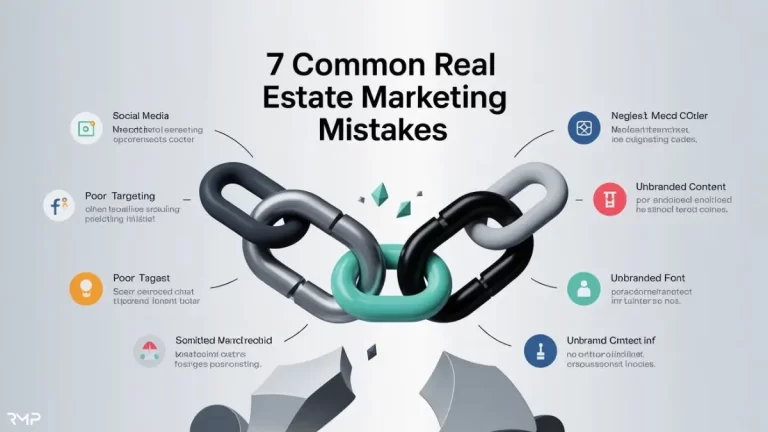
Even experienced professionals can weaken their brand identity with common mistakes. Recognizing these pitfalls helps maintain a strong, lasting presence.
Generic Logos and Copycat Messaging
Using template-based logos or slogans that mimic competitors reduces differentiation. For instance, relying on house-shaped icons without unique elements creates forgettable impressions. Messaging such as “Your Trusted Realtor” may sound reliable but fails to convey a distinctive value.
Inconsistent Visuals Across Platforms
A strong brand requires consistency. If a brokerage uses one color scheme on business cards but another on social media graphics, clients may not recognize it as the same entity. Inconsistent visuals dilute recall and professionalism.
Overcomplicating the Brand Identity
Too many fonts, an oversized color palette, or lengthy taglines can overwhelm audiences. Simplicity aids memorability. A brand identity with two to three complementary colors and a short, clear tagline usually performs better.
Ignoring Online Reputation and Reviews
Digital reputation is part of branding. Negative reviews left unanswered create distrust. According to BrightLocal’s 2023 survey, 88% of consumers say they are more likely to use a business if the business responds to all reviews, positive and negative. Ignoring this channel undermines branding efforts, no matter how polished the visuals.
FAQs About Real Estate Branding
What is real estate branding?
Real estate branding is the process of creating a recognizable identity that reflects an agent’s or brokerage’s values, expertise, and market positioning. It includes visual elements such as logos and colors, as well as messaging, tone of voice, and client experience. A strong brand helps establish trust and credibility.
Why is branding important for real estate agents?
Branding helps agents differentiate themselves in a competitive market. With many professionals offering similar services, branding communicates what makes an agent unique, whether it’s neighborhood expertise, negotiation skills, or client-first service. This differentiation influences referrals and long-term loyalty.
How is personal branding different from brokerage branding?
Personal branding highlights the individual agent’s qualities, while brokerage branding focuses on the collective identity of a real estate company. Personal branding emphasizes traits like communication style, market niche, and reputation. Brokerage branding, on the other hand, emphasizes consistency, culture, and systems that support both agents and clients.
How long does it take to build a real estate brand?
Establishing a recognizable brand typically takes several months of consistent effort. The timeline depends on how quickly visuals, messaging, and marketing strategies are aligned. Long-term success comes from consistent application, adaptation to market shifts, and maintaining trust with clients.
What mistakes should realtors avoid when building their brand?
Realtors should avoid generic logos, inconsistent messaging across platforms, and neglecting online reviews. Overcomplicated designs and copying competitor messaging are also common pitfalls that weaken brand impact.
Conclusion
Branding is no longer optional in real estate—it is a strategic necessity. From agents building personal recognition to brokerages developing scalable systems, a strong brand identity drives trust, recall, and growth. Integrating branding with digital marketing ensures visibility across every touchpoint, from websites and social platforms to client interactions.
By defining a clear positioning, maintaining consistent visuals, and delivering authentic messaging, real estate professionals can establish brands that withstand market fluctuations. Those who invest in branding not only stand out in today’s crowded market but also build lasting equity that supports referrals, repeat business, and long-term success.