SMS vs Email Marketing for Real Estate: Which Converts Better?
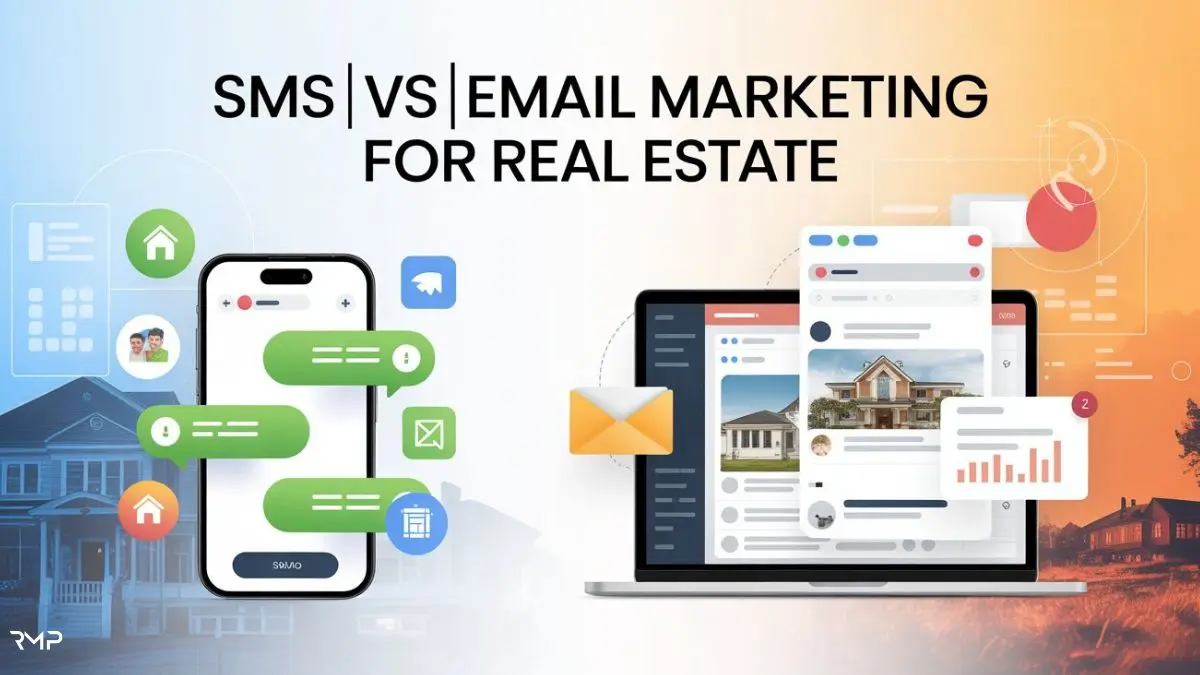
Real estate agents rely heavily on communication to turn new leads into appointments and closed transactions. The choice between SMS and email marketing influences how quickly prospects respond, how engaged they remain, and how effectively agents stay top of mind.
A comparison matters because each method serves a different purpose. SMS reaches buyers and sellers within minutes and drives fast conversations. Email supports long-term nurturing with market insights, listing updates, and branded content. Agents evaluating both approaches want concrete numbers, practical workflows, and a reliable way to choose the best channel for lead conversion.
This guide breaks down how SMS and email perform across open rates, click-through rates, responsiveness, cost, compliance, and overall ROI for real estate businesses.
What Is SMS Marketing for Realtors?
SMS marketing uses text messages to reach leads, clients, and prospects with short, timely updates. Most campaigns run through platforms such as Follow Up Boss, SimpleTexting, EZ Texting, or kvCORE, which allow automated responses, bulk sends, and personalized follow-up sequences. Agents rely on SMS because buyers and sellers typically read texts within minutes.
Realtors use SMS for fast lead contact, appointment confirmations, showing reminders, open house promotions, and property alerts. A text message can prompt a quick reply during key decision points, such as choosing a showing time or confirming interest in a listing. SMS also supports lead qualification. A short question like “Are you looking to buy within 30 days, 60 days, or later?” helps agents identify active prospects without long back-and-forth communication.
SMS works best when messages stay concise and relevant. Clear opt-ins, branded sender IDs, and simple calls to action help maintain compliance and trust. Texting stands out because it fits modern buyer behavior, where many home shoppers prefer brief updates on their phones instead of lengthy emails.
What Is Email Marketing for Real Estate Agents?
Email marketing uses scheduled campaigns, automated drips, and newsletters to educate prospects and nurture long-term relationships. Platforms like Mailchimp, Constant Contact, ActiveCampaign, and HubSpot allow agents to design professional templates, segment audiences, and track open and click-through rates. Email works well for clients who want deeper information and regular updates rather than quick notifications.
Agents use email to deliver weekly newsletters, local market reports, listing announcements, buyer and seller funnels, and educational content such as financing tips or neighborhood insights. A well-structured email sequence gives leads consistent value over months, which matters in markets where buyers take 6 to 18 months to make a move.
Email supports more detailed communication than SMS. Agents can include property photos, IDX links, calls to action, and branded graphics. This makes email a strong tool for building authority, staying top of mind, and converting long-term prospects who need ongoing guidance before reaching the decision stage.
SMS vs Email Marketing: Side-by-Side Performance Comparison
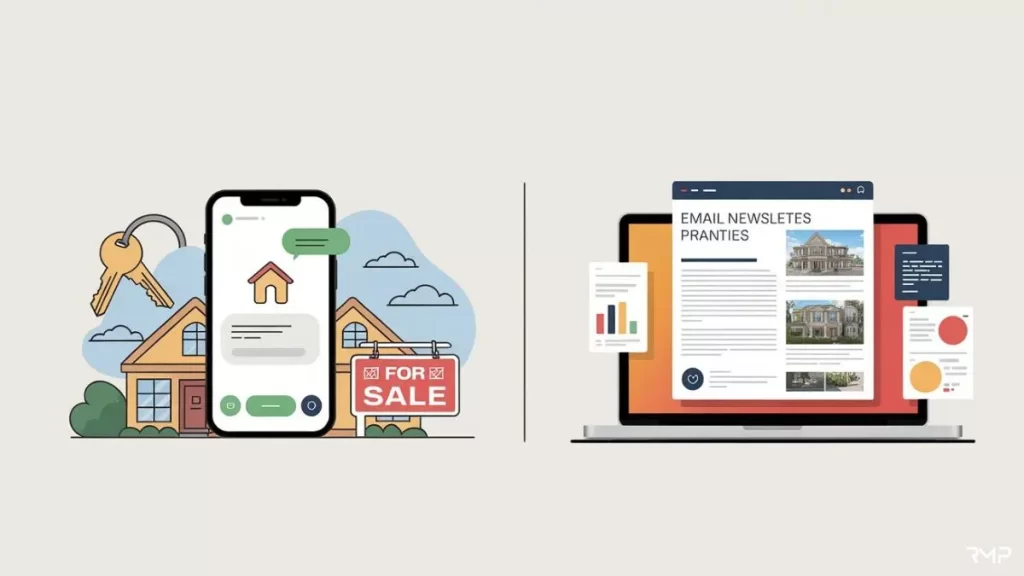
A direct comparison helps real estate agents decide where to focus their efforts. SMS and email differ in visibility, responsiveness, and overall conversion impact. These gaps influence how effectively agents secure appointments and move prospects through the pipeline.
Open Rates Comparison
SMS outperforms email in visibility. Text messages reach buyers and sellers almost instantly because they appear on the lock screen of a mobile device. According to CTIA, SMS open rates exceed 90 percent. Most emails do not receive the same engagement because inboxes remain crowded and promotional filtering reduces visibility.
Email open rates for the real estate industry typically fall between 20 and 35 percent based on the Campaign Monitor Email Benchmark report. Many emails remain unread due to inbox clutter or delayed checks.
The gap matters when agents need quick engagement, especially when responding to new inquiries.
Response Time and Engagement
Response time determines whether a lead converts into an appointment. SMS generates replies within minutes. The short format encourages quick decisions, such as selecting a showing time or confirming interest in a property.
Email requires more time because prospects read it when convenient. A message may sit unopened for hours or days. Real estate leads lose momentum when responses slow down because buyers often contact multiple agents within the same search session.
Click-Through Rates (CTR)
SMS produces higher CTR because the link appears within a short, direct message. Recipients click through to listing pages, open house details, or booking links without scanning long content.
Email CTR often ranges from 2 to 5 percent for real estate, while SMS can reach 20 to 45 percent depending on the campaign. The difference reflects user behavior. Real estate shoppers tend to take action quickly when they receive a concise message with a single call to action.
Conversion Rates and Lead Outcomes
Conversion depends on the stage of the lead. SMS works well for immediate outcomes such as:
- Scheduling a showing
- Confirming a consultation
- Re-engaging cold leads with a quick check-in
Email converts better in longer cycles. Detailed content helps potential buyers evaluate neighborhoods, financing options, and local market changes. These insights influence decisions over weeks or months.
Both channels convert leads, but they do so at different points in the customer journey.
Deliverability and Reliability
SMS deliverability remains high because messages route through carriers rather than email servers. The main restrictions involve opt-in requirements and carrier filtering for non-compliant language. When leads sign up through website forms or CRM systems, delivery remains consistent.
Email deliverability depends on sender reputation, authentication (DKIM, SPF, DMARC), and list quality. Messages can land in spam or the promotions tab if formatting or frequency triggers filters. Agents who send large images or use aggressive sales language may reduce inbox placement.
Cost Comparison
The cost structure also varies. SMS platforms charge per message or per credit. High-volume databases cost more as message frequency increases.
Email providers charge based on list size or plan tier. Sending 5,000 emails often costs less than sending 5,000 text messages. Email becomes the cost-efficient option when nurturing large databases.
Side-by-Side Comparison Table
| Performance Metric | SMS | |
| Open Rate | 90%+ on average | 20–35% |
| Typical Response Time | Minutes | Hours or days |
| CTR | 20–45% | 2–5% |
| Best Use Case | Fast lead contact and appointments | Long-term nurture and education |
| Cost | Higher per message | Lower for large lists |
| Compliance Requirements | Strict opt-in rules | Sender reputation affects placement |
Advantages of SMS Marketing for Real Estate
SMS helps real estate professionals reach clients at moments when timing shapes outcomes. The channel supports fast responses, clear communication, and stronger lead engagement, especially within the first few minutes after an inquiry.
High Open and Engagement Rates
Text messages reach prospects quickly because they appear on mobile screens without requiring inbox checks. Most buyers and sellers monitor their phones throughout the day, which keeps SMS visibility high. This makes SMS effective for urgent updates such as showing confirmations or new listing alerts.
Suitable for Time-Sensitive Communication
Real estate activity often involves scheduling, last-minute changes, and brief instructions. SMS helps agents send essential updates such as:
- Showing reminders
- Appointment confirmations
- Open house directions
- Offer deadlines
These messages keep transactions moving without long delays.
Personal, Direct, and Conversational
Texting feels natural to consumers because it mirrors daily communication. Short messages reduce friction and encourage clear replies. A simple question such as “Which day works better for a showing: Saturday or Sunday?” often produces a faster response than a long email thread.
Personalization helps too. Including a lead’s name, search area, or preferred price range supports trust and relevance.
Effective for Lead Qualification
SMS helps agents qualify new leads with minimal effort. A short question can reveal motivation, timeline, or budget. Platforms like Follow Up Boss or LionDesk allow automated sequences that send qualifying questions as soon as a lead registers on a website or portal.
A quick exchange helps agents decide whether a lead needs immediate attention or belongs in a long-term nurture sequence.
SMS Best Practices for Realtors
- Keep messages under 160 characters
- Use clear opt-in language on forms
- Add a simple call to action such as “Reply 1 to confirm”
- Avoid bulky links or excessive frequency
Advantages of Email Marketing for Real Estate
Email supports deeper communication and long-term trust building. The format allows real estate agents to deliver educational content, neighborhood insights, and detailed listing information that prospects can revisit later.
Ability to Provide Long-Form Value
Email allows agents to include market reports, property photos, financing guidance, and community updates. Prospects evaluating a move want clear information. A newsletter can explain price trends, school district statistics, or renovation ideas in ways that SMS cannot.
Long-form content shapes credibility, especially for clients comparing multiple agents.
Scalable Automation for Long Pipelines
Real estate transactions often stretch across months. Email automation sends consistent value without requiring manual follow-up. Drip campaigns help nurture leads at different stages. Examples include:
- Buyer funnels with search tips
- Seller sequences with staging advice
- Monthly market updates
- New listing announcements
Automation keeps prospects connected even when they are not ready to schedule an appointment.
Strong Branding Opportunities
Email templates allow agents to showcase logos, color palettes, property images, and IDX links. Visual branding reinforces authority and increases recognition. When a prospect receives a series of polished emails, the agent stays memorable over time.
Clear formatting, buttons, and graphics also highlight calls to action such as “View all homes in Scottsdale under $600,000.”
Cost-Efficient for Large Databases
Email remains one of the least expensive marketing channels for real estate. Providers charge based on subscriber count or plan level, which keeps costs manageable for teams with thousands of leads. Because emails do not incur per-message fees, agents can send regular updates without significant budget increases.
Email Best Practices for Realtors
- Write short subject lines with clear intent
- Segment buyers, sellers, investors, and past clients
- Space sends to avoid fatigue
- Add personalized elements tied to search behavior
- Include one main call to action per email
Limitations of SMS Marketing in Real Estate
SMS offers speed, but several constraints limit how broadly real estate agents can use it. These factors influence deliverability, cost, and user experience.
Compliance and Legal Restrictions
Text messaging requires strict adherence to TCPA rules. Leads must provide explicit consent before receiving texts. Carriers may filter messages that resemble spam or lack proper opt-in language. Agents must maintain accurate records of consent to avoid compliance issues.
Limited Message Length
SMS restricts communication to short messages. Complex instructions, market updates, and detailed property information do not fit well in this format. Agents often rely on links, which may reduce clarity if the message feels crowded.
Higher Costs for Large Lists
SMS platforms charge per message or per credit. A team sending thousands of texts each month faces higher costs compared with email. This becomes a challenge for brokerages managing large databases with frequent follow-ups.
Risk of Being Viewed as Intrusive
Texting feels personal. Frequent or poorly timed messages can frustrate recipients and harm trust. Buyers and sellers may opt out if the content lacks relevance or arrives too often.
Limitations of Email Marketing in Real Estate
Email supports long-term nurturing, yet several limitations affect engagement and visibility.
Lower Open Rates
Emails compete with crowded inboxes. Promotional filtering and spam rules reduce visibility. Many recipients scan subject lines quickly and skip messages that feel generic or overly promotional.
Slower Response Times
Email does not excel in situations requiring immediate action. A new inquiry may wait hours before being read, which allows other agents to respond first. Slow response times reduce the chance of booking appointments with motivated buyers.
Dependence on Strong Copy and Design
Weak subject lines, large images, long paragraphs, and cluttered layouts lower engagement. Effective email marketing requires consistent testing, clear formatting, and well-written content. Agents without marketing support may struggle to maintain quality.
Inbox Competition
Real estate emails compete with retail promotions, billing notifications, and personal messages. Standing out requires consistent value and clear relevance. Even well-designed campaigns lose impact when sent too frequently or without proper segmentation.
Should Realtors Use SMS or Email? The Hybrid Strategy That Converts Best
Both channels support different stages of the real estate journey. SMS drives immediate engagement, while email sustains long-term relationships. A hybrid strategy helps realtors reach prospects at the right moment with the right level of detail.
Why a Multi-Channel Approach Outperforms Either Channel Alone
Homebuyers and sellers respond differently depending on time of day, urgency, and the type of information they need. A lead who replies instantly to a text may prefer detailed neighborhood insights by email later that week. Using both channels improves reach, reduces lead drop-off, and increases the number of touchpoints without overwhelming prospects.
SMS strengthens speed-to-lead performance. Email builds authority through structured content. Together, they create a balanced communication system that mirrors actual buyer behavior.
Recommended Workflow for Maximum Conversion
A practical hybrid process helps agents manage leads with consistent timing and relevant content. The following workflow aligns each channel with the stage of the customer journey:
Step 1: New Leads – Start with SMS
Send a short text within minutes of receiving an inquiry. This creates quick engagement and prevents the lead from contacting multiple agents.
Examples include:
- Showing availability
- Greeting and confirmation
- Simple qualifying questions
Step 2: Same Day – Activate an Email Drip
While SMS handles immediate replies, the email sequence provides structure. A new lead receives a welcome message, a short introduction, and useful links such as property search tools or market reports.
Step 3: Ongoing Follow-Up – Mix SMS and Email Touchpoints
Use a balanced cadence that avoids fatigue. SMS helps with reminders and appointment confirmations. Email offers deeper content, property recommendations, or educational guides.
Step 4: Long-Term Nurture – Shift to Email-First
Leads exploring options over several months benefit from market updates, listing roundups, and neighborhood insights. Email fits this stage because prospects revisit saved messages when they resume their search.
Tech Stack That Supports a Hybrid System
Many CRM platforms integrate both SMS and email, allowing agents to automate and personalize communication. Systems such as Follow Up Boss, kvCORE, Real Geeks, and LionDesk combine:
- SMS automations triggered by new registrations
- Email drip sequences for long-term nurturing
- Lead tagging and segmentation
- Analytics for reply rate, open rate, and appointment conversions
This setup reduces manual follow-up and ensures every lead receives timely, relevant communication.
A combined approach delivers stronger results than choosing SMS or email alone. Realtors who match each channel to the appropriate stage of the buyer or seller journey see higher engagement, more appointments, and better conversion outcomes.
You May Also Like: 37 Real Estate Email Templates That Increase Open Rates
Final Verdict
SMS and email each play a distinct role in real estate communication. SMS delivers speed, visibility, and direct responses, which helps agents secure appointments and qualify leads in minutes. Email supports long-term influence by offering space for market insights, detailed property information, and branded content that prospects can revisit later.
Choosing one channel over the other depends on the lead’s stage. SMS performs best when quick action matters, such as responding to new inquiries or confirming showings. Email delivers more value when buyers or sellers need education, market context, or guidance over several months.
A hybrid system provides the strongest results. SMS handles real-time engagement. Email reinforces credibility. When used together, both channels cover the full cycle from first contact to closed transaction.
Realtors who match the message to the channel and align communication with the lead’s timing see higher conversion rates, stronger relationships, and a more predictable pipeline.